How To Build A Campfire
To most casual outdoorsmen, a campfire is a campfire: Light kindling, toss
on bigger sticks, and then a few logs. This type of fire is great for telling
ghost stories and roasting marshmallows but is practically useless for
anything else but uncontrolled heat. If you want a fire to cook with and
requires small amounts of fuel, you can build a fire with more finesse.
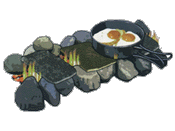 The hunter's fire is popular with sportsmen moving from place to place
on a regular basis. Start by forming two rows of rocks parallel to each other,
which form a corridor facing the wind. Build a manageable fire in between.
The fire will burn down to coals fairly soon, and then cooking pots or frying
pans can be placed across the rocks above the coals for cooking. Slabs of flat
rock can be laid on top of the rocks with gaps between them. Each gap can
accomodate a pot or pan.
The hunter's fire is popular with sportsmen moving from place to place
on a regular basis. Start by forming two rows of rocks parallel to each other,
which form a corridor facing the wind. Build a manageable fire in between.
The fire will burn down to coals fairly soon, and then cooking pots or frying
pans can be placed across the rocks above the coals for cooking. Slabs of flat
rock can be laid on top of the rocks with gaps between them. Each gap can
accomodate a pot or pan.
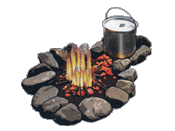 Another popular campfire is the keyhole fire. Gather enough flat
stones to form a circle with a rectangular projection from one side, making
sure the stones are close enough to securely support your cookware. Build
your campfire inside the circle. After you get a good bed of coals, simply
rake some of them into the rock trench for cooking your food. As the coals
die down, just pull more in from the main fire.
Another popular campfire is the keyhole fire. Gather enough flat
stones to form a circle with a rectangular projection from one side, making
sure the stones are close enough to securely support your cookware. Build
your campfire inside the circle. After you get a good bed of coals, simply
rake some of them into the rock trench for cooking your food. As the coals
die down, just pull more in from the main fire.
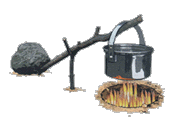 If you're on the move and need a quick lunch, try an Indian fireplace.
Dig a circular hole about 9 inches deep and about 2 inches wider than your
cooking pot. Find a stout green stick, another forked green stick, and a
heavy rock. Use the forked stick as a prop for the longer one and place the
rock on the end fartherest from the fire. Your cooking pot can then hang from
a fork or a precut notch near the end, right over the fire.
If you're on the move and need a quick lunch, try an Indian fireplace.
Dig a circular hole about 9 inches deep and about 2 inches wider than your
cooking pot. Find a stout green stick, another forked green stick, and a
heavy rock. Use the forked stick as a prop for the longer one and place the
rock on the end fartherest from the fire. Your cooking pot can then hang from
a fork or a precut notch near the end, right over the fire.
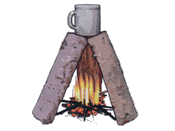 The Swedish fire lay uses almost no wood and is convenient for small
meals and hot drinks. To build one, simply construct a tiny star-shaped fire
and place three split logs or flat stones in a pyramid shape above it; they
should lean together so that their apex is directly above the fire. As long
as the distance from cup or small pot to the fire is not more than 12 inches
or so, you will have all the heat you need to quickly warm your food and
drink.
The Swedish fire lay uses almost no wood and is convenient for small
meals and hot drinks. To build one, simply construct a tiny star-shaped fire
and place three split logs or flat stones in a pyramid shape above it; they
should lean together so that their apex is directly above the fire. As long
as the distance from cup or small pot to the fire is not more than 12 inches
or so, you will have all the heat you need to quickly warm your food and
drink.
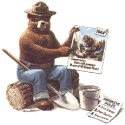 REMEMBER:
Check the fire regulations for the area or campground in which you are
staying before building a fire.
Camps, in particular, often have specific rules about where and how you may
build fires. In general, select a spot at least 15 feet away from trees,
visible roots, and bushes and far away from dry grass or weeds. Never leave
a fire unattended and keep a bucket of water and a shovel handy in case of
emergency. Before leaving, check that the fire is completely out. If you are
in the wilderness, make sure the ashes are buried and the fireplace area is
back to its natural state.
REMEMBER:
Check the fire regulations for the area or campground in which you are
staying before building a fire.
Camps, in particular, often have specific rules about where and how you may
build fires. In general, select a spot at least 15 feet away from trees,
visible roots, and bushes and far away from dry grass or weeds. Never leave
a fire unattended and keep a bucket of water and a shovel handy in case of
emergency. Before leaving, check that the fire is completely out. If you are
in the wilderness, make sure the ashes are buried and the fireplace area is
back to its natural state.